.png)
Strengthening Malawi’s first MMed Radiology Residency Programme
Worldwide Radiology is working with Kamuzu University of Health Sciences (KUHeS) and Else Kröner-Fresenius-Stiftung (EKFS) to help grow Malawi’s radiology workforce.
This project builds on years of collaboration with KUHeS and responds to a very simple problem: Malawi needs more radiologists.
EKFS has a long history of supporting health projects in Malawi. We are delighted that Radiology is now part of that story.
When the Malawi MMed team heard that the new grant had been awarded, there was huge excitement. The funding means the current residents will experience 10 months at adult and paediatric radiology departments affiliated with the University of Cape Town, South Africa.
They will also receive stronger support at KUHES from visiting and remote faculty.

“We want a graduate who is both globally competent and locally relevant. This grant will go a long way in ensuring this.”
Professor Nyengo Mkandawire, former Dean of KUHeS
Addressing a critical gap
Malawi is a landlocked country in Sub-Saharan Africa and is classed by the United Nations as one of the least developed countries. It has a fast-growing population of more than 21 million people, around half of whom are under 18.
Across this whole population, there are currently fewer than 10 Radiologists. This works out at roughly one Radiologist for every 2 million people. In the United Kingdom the ratio is closer to one per 16,000 people, and in the United States one per 10,000.
The impact is clear. Many patients do not have access to safe, high-quality imaging and the poor and marginalised are most affected. They cannot afford private radiology services and are more likely to experience delayed or incorrect diagnosis.
For many years the Ministry of Health tried to respond by funding Malawian doctors to train abroad, as there was no national training programme. Unfortunately, this approach is insufficient to build lasting national capacity. The shortage in Malawi remained.
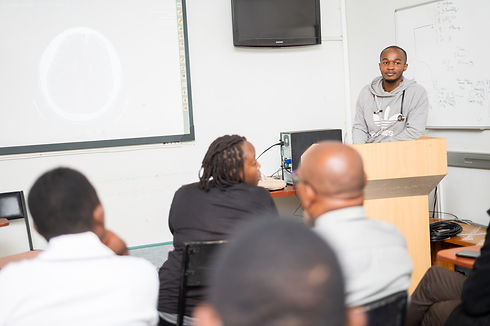
This urgent need for locally trained radiologists led KUHeS to establish the country’s first MMed Radiology residency programme.

Building the foundations
The launch of the MMed Radiology programme was made possible by the NORHED II grant (Norwegian Programme for Capacity Development in Higher Education and Research for Development).
In 2021, KUHeS appointed Dr Karen Chetcuti, currently WWR’s EKFS project lead, as the first Radiology faculty member. Together with then Dean Professor Mkandawire, she set out to create and deliver this new MMed programme:
-
Developing a curriculum with a focus on high-quality, locally relevant content
-
Leading curriculum review with the Ministry of Health, Medical Council of Malawi, National Council for Higher Education, KUHeS faculty and Addis Ababa University to align the programme with national education and governance standards
-
Creating teaching modules and trainee job plans at Queen Elizabeth Central Hospital (Blantyre) and Kamuzu Central Hospital (Lilongwe)
-
Mobilising a global network of radiologists from Worldwide Radiology, University of North Carolina and Rad-Aid to provide regular online case reviews, journal clubs and teaching sessions
-
Organising upgrades of infrastructure, secure IT and image sharing networks, teleconferencing facilities and radiology reporting rooms, with support from NORHED II, Worldwide Radiology donors and the Malawi-Liverpool-Wellcome Trust (MLW)
The programme launched in September 2022 with four residents. Since then three more residents have joined and six currently remain in active training across the two sites.
Worldwide Radiology has been closely involved from the start, helping to:
-
Organise visits by international volunteer radiologists for on-site teaching
-
Coordinate and provide remote teaching in subspecialty topics that are under-represented in Malawi
-
Contribute to mandatory resident continued workplace based assessments and exam question bank growth
-
Pilot remote expert mentoring for residents, for example during multidisciplinary gynaecology oncology meeting
Radiology education delivered by this growing team of residents is reaching other specialties, multiplying the educational impact. Weekly meetings in paediatrics, internal medicine and emergency medicine now include radiology case discussions, while residents are also providing training on Point of Care ultrasound courses for general clinicians, delivered by various other organisations in Malawi. These collaborations across departments are embedding imaging into clinical care throughout the hospitals.

Project activities
International visiting faculty
Experienced international radiologists will travel to Malawi to provide in-person teaching and mentoring. During these visits:
-
Residents gain case-based learning and supervised reporting experience
-
Visiting experts deliver lectures, assessments and feedback aligned to the curriculum
-
Faculty will learn from Malawian colleagues about their health system and diseases
Remote expert teaching
Remote teaching has been a core part of the programme since it began in 2022. It allows residents to learn from a wide range of subspecialty experts currently unavailable in-country. Through this project, remote education will be:
-
Expanded and coordinated by a project manager, supporting KUHeS and partners to align content closely with the MMed curriculum
-
Delivered more regularly through online lectures, case conferences and journal clubs
-
Monitored and evaluated to maintain quality and ensure it meets learning needs
-
Integrated with assessments and feedback that count towards residency progression
International placements
Each resident is expected to complete a 10-month placement in an academic Radiology department in another African country during the latter part of their training. They will:
-
Consolidate and expand their knowledge and skills in a context relevant environment
-
Experience established radiology services that they can adapt and apply on their return
-
Build long-term professional links with host departments for future collaborations
Who will benefit
Patients
At Queen Elizabeth Central Hospital alone there are around 1300–1500 in-patients at any one time and an estimated 3,000 outpatients attending the clinic each day. As more residents graduate and move to other hospitals, more patients across the country will gain access to better imaging services. Improved radiology capacity will:
-
Increase the number, accuracy and speed of diagnosis
-
Strengthen treatment and follow-up for both adults and children
-
Support more radiologist performed specialist procedures
Radiology residents
Residents will receive high-quality, structured training from Malawian faculty and international experts, with on-site supervision, remote teaching and international placements. As more residents join the programme over the coming years, a steady pipeline of radiologists will be created. Graduates will also start returning as educators, strengthening the teaching team and become Malawi’s Radiology leaders of the future.
Other doctors and health workers
Non-radiology medical students and postgraduate doctors across paediatrics, internal medicine, surgery and other specialties will have more opportunities for radiology education through multidisciplinary meetings and courses. This will improve their diagnostic skills as they work in both central hospitals and district facilities, including at many sites without a radiologist.
Radiographers and other allied health professionals will also benefit from working alongside a growing number of Malawian radiologists. Together they will improve the quality and safety of imaging and prepare the ground for future roles such as reporting radiographers.

Ensuring sustainability
EKFS support will play a key role in making the residency programme sustainable. By 2028, six Malawian radiologists will have graduated. They, and those who train after them, will become educators themselves, creating a “training the trainer” model.
Embedding graduates in a strong international network with colleagues who understand the Malawian context, will:
-
Expand their professional support system
-
Open up opportunities to develop new services, education and research together
-
Potentially address the challenge of “brain drain”, through shared opportunities
This project sits alongside other EKFS-supported initiatives in paediatric ultrasound and paediatric specialist training in Malawi and will also help lay the groundwork for the planned Else Kröner Center in Global Child Health, led by the Malawian Paediatrics and Child Health Association (PACHA).